Logan County, West Virginia · Mine Wars
When thousands of coal miners took up arms in the mountains of West Virginia.
The Battle of Blair Mountain

West Virginia, 1921. Thousands of armed coal miners were moving through the mountains.
Many were veterans of World War I. Some carried military rifles. Red bandanas appeared around miners' necks. Ahead of them stood a sheriff and an armed force determined to stop them, with machine guns waiting along a mountain ridge.
Then airplanes appeared overhead, and bombs began falling. Eventually, the President of the United States sent in federal troops.
This wasn't Europe. This wasn't the Civil War. This was West Virginia, and it became known as the Battle of Blair Mountain.
But to understand why thousands of American coal miners were willing to take up rifles, we have to go back several years.
Chapter 1
Life in the Company Towns
In the early 1900s, much of southern West Virginia was coal country in the most literal sense. Railroads had opened the mountains, and coal companies built whole towns in the hollows to house the men who worked underground.
In many of these coal camps, the company owned nearly everything: the houses, the store, often the church and school buildings, and the land the roads ran across. Many miners were paid partly in scrip, company money that was most easily spent at the company store. Living in a company house usually depended on keeping a company job.
The work itself was dangerous. Roof falls, explosions and accidents killed miners in West Virginia every year. Men argued over pay, over how coal was weighed, and over whether they could join a union without losing their jobs and homes.
Conditions were not identical everywhere. Some camps were better kept than others, and some operators and miners had working relationships that others did not. But across much of the southern coalfield, the question of the union — the United Mine Workers of America — became explosive. For many miners, the union meant a voice and protection. For many operators, it meant losing control of costs in a fiercely competitive market.
To keep unions out, some companies hired armed guards. That decision would shape everything that followed.
Chapter 2
The Detectives
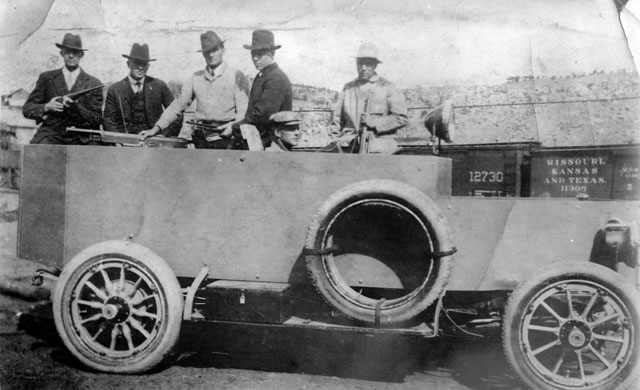
The Baldwin-Felts Detective Agency, based in Bluefield, West Virginia, supplied armed men to coal and railroad companies. In the coalfields they worked as mine guards: protecting company property, watching for union organizers and, during strikes, carrying out evictions.
Evictions were especially bitter. Because miners lived in company houses, a miner who joined a union or went on strike could see his family and belongings put out on the road. Families who lost their homes often ended up in tent colonies supported by the union.
To the companies, the agents were security in a violent labor fight. To many miners, they were a private army that stood between them and their rights. The agency appears again and again in the story of the Mine Wars.
Chapter 3
Sid Hatfield
Matewan · May 19, 1920
The Matewan Shootout
In the spring of 1920, miners around Matewan were joining the union, and the Stone Mountain Coal Company responded with evictions. On May 19, a group of Baldwin-Felts agents, including Albert and Lee Felts, brothers of the agency's co-owner, arrived to put union families out of company houses.
Hatfield and Mayor Cable Testerman confronted the agents over their authority to carry out the evictions. As the agents prepared to leave town by train, the argument erupted into gunfire on Matewan's main street. Armed miners and townspeople were part of the fight.
When it ended, ten people were dead: seven detectives, including both Felts brothers, two miners, and Mayor Testerman. It was a street killing in a small town, and it was not heroic for the families who lost someone that day.

Hatfield and others were tried for the killings and acquitted. For many miners, Sid Hatfield became a symbol of resistance to the mine-guard system. For the agency, the matter was not finished.
Chapter 4
The Courthouse Steps
August 1, 1921 · Welch, West Virginia
McDowell County Courthouse
In the summer of 1921, Sid Hatfield and his friend Ed Chambers were due in court in Welch, the McDowell County seat, on a charge connected to an earlier shooting. They walked toward the courthouse with their wives.
Baldwin-Felts agents were waiting at the top of the steps. Hatfield and Chambers were shot and killed there, in front of their wives. Witnesses said the two men were unarmed; the agents claimed self-defense and were never convicted.

The news spread through the coalfields.
To miners who already regarded Hatfield as a hero, his death became a rallying point. Mingo County was under martial law, union miners were sitting in jail there, and now the man who had stood up to the detectives had been killed on a courthouse staircase.
Chapter 5
The Miners Gather
In August 1921, armed miners began gathering at Marmet and along Lens Creek, just south of Charleston. Their stated aim was to march into Mingo County, free the jailed union miners and end martial law there. To get to Mingo, they would have to cross Logan County.
How many came is not known precisely. Contemporary reports and later historians give numbers ranging from several thousand to more than ten thousand, and the total changed from day to day as men joined and left. What is clear is that it was many thousands.
They were coal miners and union supporters, and many were World War I veterans who knew how to move and fight as a unit. They brought hunting rifles, shotguns, military rifles and whatever ammunition they could find.
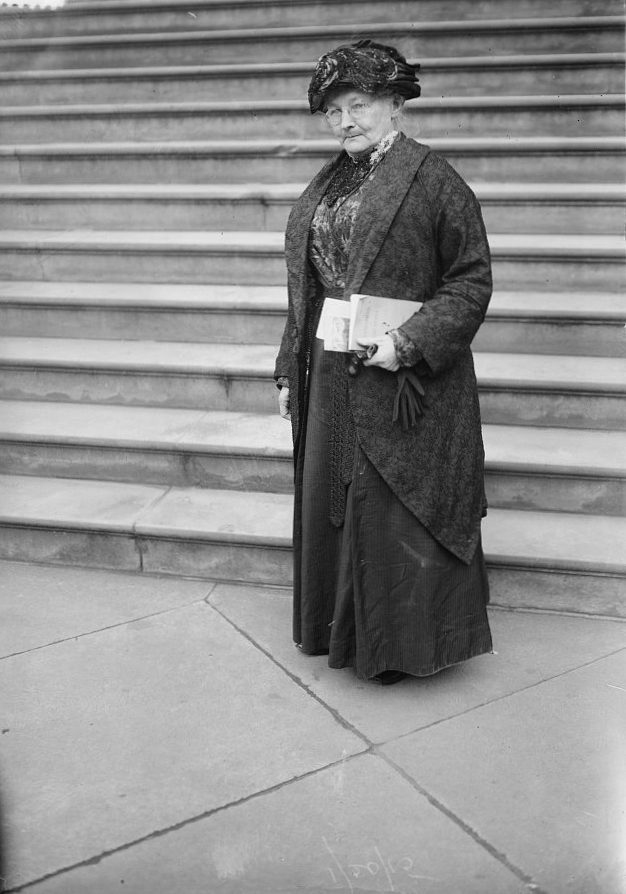
Around August 24, Mother Jones went to the miners' camp at Marmet and urged them to turn back, warning that they would be slaughtered. She read aloud what she said was a telegram from President Harding promising to end the mine-guard system in West Virginia if they went home.
Union leaders doubted it. When she would not show them the telegram, they checked with the White House, which said no such message had been sent. Many miners felt betrayed, and the march went on. Historians still debate what the telegram was and why she presented it, but her fear of a bloodbath is well documented.
Chapter 6
The Red Bandanas
Many marchers tied red bandanas around their necks. With men arriving from dozens of camps, and no uniforms, the bandanas helped them recognize one another.
That detail has become one of the most repeated parts of the story, because of a word: redneck.
Legend vs. history
- Legend
“The Battle of Blair Mountain invented the word redneck.”
The word was already in use before 1921, usually as an insult for poor, rural white Southerners. What is documented is that red neckerchiefs were worn by the marching miners. Over time, that image became linked to the word in Mine Wars folklore and in how many Appalachian people tell the story today.
Chapter 7
The Miners' General
Blizzard was not the union's top officer, and much of the march was loosely organized. But witnesses and later testimony placed him at the center of it, moving between camps, relaying orders and keeping men supplied. That is why prosecutors would later single him out.
Chapter 8
The Man Waiting on the Mountain
Logan County had no union. Chafin intended to keep it that way. Organizers who entered the county were known to be beaten, arrested or run out. The National Park Service describes him as the notorious sheriff whose main job was to protect the coal operators' interests.
When word came that thousands of armed miners were marching his way, Chafin assembled an armed force of his own: deputies, mine guards, state police and civilian volunteers, with a commonly cited total of around 3,000. Coal operators helped pay for it. His men dug in along the ridgeline of Blair Mountain with rifles and machine guns, and they had access to airplanes.
To union miners, Chafin was a sheriff who had turned the law into a tool of the coal companies. To operators and many of his supporters, he was defending the county against an armed invasion by men who had no right to cross its line. Both views were held strongly in 1921.
Chapter 9
The March

- 1
Marmet
Gathering point on the Kanawha River near Charleston.
- 2
Lens Creek
The route south out of Marmet.
- 3
Madison
Boone County seat, on the road toward Logan.
- 4
Blair
The town where marchers camped below the mountain.
- 5
Blair Mountain
The ridge between the marchers and Logan County.
- 6
Logan
Chafin's county seat, on the far side of the ridge.
- 7
Mingo County
The marchers' destination, where union miners were jailed.
Geography decided the battle. Blair Mountain is part of a long ridgeline that separates the valleys where the marchers gathered from Logan County and, beyond it, Mingo. The roads crossed the ridge at a few gaps. Whoever held the high ground could fire down on anyone coming up.
Chafin's forces held it.
Chapter 10
Blair Mountain
Late August – Early September 1921
Thousands of armed Americans faced each other across an Appalachian mountain.
In the last days of August, the marchers made camp around the town of Blair, below the mountain. Above them, Chafin's men waited behind breastworks and in trenches along the ridge.
The terrain was brutal. Dense forest covered steep slopes cut by creeks and narrow hollows. Men climbing from below could barely see who was shooting at them. Men on the ridge had cleared fields of fire and knew exactly where the paths came up.
Chapter 11
The Preacher with a Rifle
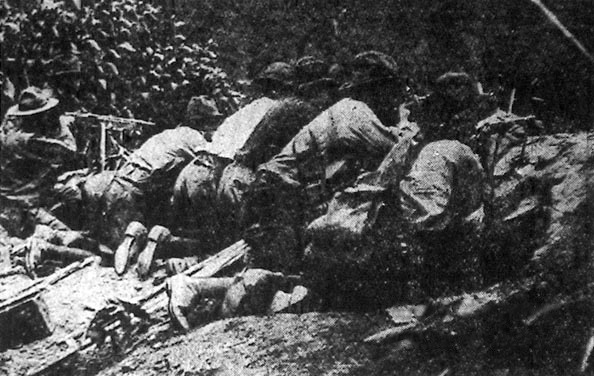
According to the National Park Service, on the night of August 30 Wilburn led about 70 miners, including two of his sons, up the mountain. On a dawn patrol, Wilburn and four other men met three of Chafin's deputies, including John Gore, a well-known Logan County mine guard.
Shots were fired. The miners wounded Gore, who then shot and killed a miner named Eli Kemp. Wilburn shot Gore dead. Two men from two sides of the same mountain lay dead in the woods.
The Park Service identifies this confrontation as the beginning of the Battle of Blair Mountain.
Chapter 12
The Mountain Erupts
For roughly the next three days, fighting ran along miles of ridgeline. Marchers pushed up through the gaps and hollows; the defenders answered with rifle fire and machine guns from fortified positions. The Park Service account mentions Gatling guns as well as rifles and other firearms.

Much of the fighting was long-range and scattered, fought among trees by men who often could not see their targets. Small groups advanced, fell back and advanced again.
Nobody knows exactly how many died. Figures in historical accounts vary widely, from a handful on the defenders' side to many more among the miners, whose dead may not all have been counted. Any single precise number should be treated with caution.
Chapter 13
Bombs over West Virginia
Airplanes appeared over the mountain.
During the fighting, Chafin had privately hired aircraft fly over the miners' positions. According to the National Park Service, they dropped two nausea-inducing gas bombs and two homemade bombs filled with gunpowder, nuts and bolts.
“American citizens were being subjected to aerial bombardment on their own soil.”
The bombs appear to have done little physical damage. Later retellings sometimes describe much larger bombing raids; the documented record supports a small number of crude bombs.
Chapter 14
Washington Responds
West Virginia's governor asked for federal help. On August 30, Harding issued a proclamation ordering the armed marchers to disperse and go home. The fighting continued.
The federal government then sent troops. West Virginia State Police historical records put the Army deployment at about 2,100 soldiers. Army Air Service planes were also sent into the state for reconnaissance and support.

Chapter 15
The Army Arrives
The miners now faced the United States Army.
Many of the marchers had worn the same uniform a few years earlier in France. When federal troops arrived in early September, the miners generally chose not to fight them. The Park Service notes that they were not rebelling against the federal government, but against local and state authorities they believed served the coal companies.

Some men surrendered their rifles. Others hid or discarded them and walked home over the hills. By about September 4, the fighting was over.
Chapter 16
The Aftermath
The miners did not reach Mingo County. They did not free the jailed union men, and they did not remove Don Chafin.
In the months that followed, Logan County grand juries indicted hundreds of participants, with commonly cited totals above 500. Charges included murder, conspiracy and treason against the state of West Virginia.
Union strength in the southern coalfields weakened sharply in the years afterward, as legal costs mounted and membership fell.
Then came the treason trials.
Chapter 17
The State of West Virginia vs. Bill Blizzard
In 1922, the trials were moved to Charles Town, in Jefferson County, at the other end of the state. Bill Blizzard was tried there for treason, in the same courthouse where John Brown had been tried for treason against Virginia in 1859.
The idea of an American labor organizer on trial for treason against a state drew national attention. Prosecutors had to prove he had waged war against West Virginia itself.
The jury acquitted Blizzard.
Other cases ended differently. At least one man, Walter Allen, was convicted of treason and disappeared while free on bail. John Wilburn and one of his sons were convicted of murder in John Gore's death. Many other charges were eventually dropped. Together, the trials drained the union's money and attention at a time when it was already losing ground.
Chapter 18
Did the Miners Lose?
In 1921, yes.
The march failed to break through Blair Mountain. The miners dispersed after federal intervention. Union strength in southern West Virginia declined through the 1920s.
Over the longer story, it is more complicated.
The struggle for labor rights continued. In the 1930s, new federal laws protected the right to organize, and the United Mine Workers grew strong across the American coalfields, including Logan County.
Blair Mountain alone did not create those changes. It is one chapter in a much longer labor movement, but it showed, in the starkest possible way, how far the conflict in the coalfields had gone.

Chapter 19
Characters of Blair Mountain
Swipe through the people of the story

Sid Hatfield
The fallen lawman who became a miners' symbol
Police chief of Matewan
Sided with union miners during the 1920 Matewan shootout. Killed by Baldwin-Felts agents on the Welch courthouse steps in 1921, his death helped set the march in motion.

Bill Blizzard
The miners' young leader
UMWA organizer
A 28-year-old union leader many marchers looked to for direction. Tried for treason against West Virginia and acquitted.
Don Chafin
The sheriff who fortified the mountain
Sheriff of Logan County
Kept unions out of Logan County with deputies partly paid by coal operators. Assembled the armed force that held the Blair Mountain ridge.
Mother Jones
The legendary organizer who tried to stop the march
Labor organizer
Revered by miners, she urged them to turn back. The telegram she read from the President was denied by the White House.
John Wilburn
The preacher who went up the mountain with a rifle
Baptist minister and miner
Led about 70 miners up the ridge. The clash in which he killed Deputy John Gore is recognized as the start of the battle. Later convicted of murder.

Warren G. Harding
The president who sent in the Army
29th President of the United States
Ordered the marchers to disperse, then sent federal troops and aircraft. The miners laid down their arms rather than fight the Army.
Baldwin-Felts
The detective agency entangled in the Mine Wars
Private detective agency
Supplied mine guards to coal companies and carried out evictions. Its agents were at the center of both Matewan and the Welch killings.
Chapter 20
Myths & Legends
Legend vs. history
- Legend
“Redneck originated at Blair Mountain.”
The word existed before 1921. The miners did wear red bandanas, and the association grew later.
- Disputed
“One million rounds were fired.”
The figure is repeated often, but no reliable count exists. Heavy firing over several days is well documented; the exact number is not.
- Legend
“U.S. military planes bombed the miners.”
Bombs were dropped from privately operated aircraft on the anti-miner side. Army planes were sent for observation and support, and there is no reliable evidence they bombed anyone.
- Legend
“Thousands died.”
Thousands fought, but death estimates are far lower. The exact number is uncertain and probably always will be.
- Likely / partially documented
“Miners buried weapons in the mountains.”
Many men hid or threw away their guns rather than surrender them, and the story of rifles cached in the hills is widely told. Individual stories are hard to verify.
- Disputed
“Unexploded bombs have been found on the mountain.”
We found no reliable, documented account of this. Archaeologists have recorded bullets and cartridge cases on the battlefield, which is different.
Chapter 21
By the Numbers
- Armed marchers (estimates vary)
- Thousands
- Armed marchers (estimates vary)
- Chafin's defenders (commonly cited)
- ~3,000
- Chafin's defenders (commonly cited)
- Federal soldiers sent
- ~2,100
- Federal soldiers sent
- Participants indicted
- 500+
- Participants indicted
Source: National Park Service; West Virginia State Police history; e-WV, the West Virginia Encyclopedia. The death toll is not given because estimates conflict.
Chapter 22
Then & Now
Blair Mountain — 1921
Blair Mountain — later years

Today, Blair Mountain is quiet forest above WV Route 17. Archaeologists have found traces of the fighting, such as cartridge cases and old defensive positions, along the ridge.
The battlefield's protection has been fought over too. It was added to the National Register of Historic Places in 2009, removed months later after objections from property owners, and restored to the Register in 2018 after a long legal fight. Much of the land is privately owned, and surface mining has taken place nearby.
Chapter 23
Why Don't More People Know This?
Thousands of armed workers. A private armed force. Machine guns. Aircraft. Federal troops. Treason trials. All in the mountains of Appalachia.
Yet many Americans have never heard of it. It was rarely taught in schools for decades, including in West Virginia. It was a story of Americans fighting Americans over work, not a war with a clear enemy or a clean ending. Many families who lived through it kept quiet about their part.
That is changing. Historians, museums, descendants and preservation groups have spent recent decades telling the story again, and it has found new readers well beyond the coalfields.
More than a century later, Blair Mountain is quiet.
The rifles are gone. The machine guns are gone. The armies are gone.
But beneath the trees is the landscape where thousands of Americans once took up arms over who controlled life and work in the coalfields.
Whatever judgment history makes of the men who climbed that mountain, Blair Mountain remains evidence of just how far the struggle between labor and industrial power once went in Appalachia.
Sources & Further Reading
- National Park Service — The Battle of Blair Mountain
Wilburn and Gore, the aerial bombs, the surrender and the September 4 end of fighting.
- e-WV: The West Virginia Encyclopedia — Battle of Blair Mountain
- West Virginia Mine Wars Museum
Museum in Matewan dedicated to the Mine Wars.
- James Green, The Devil Is Here in These Hills (2015)
Book-length history of the West Virginia Mine Wars.
- Wikimedia Commons — historical photographs of the battle
Source of the 1921 newsreel stills, newspaper pages and portraits used here.
Know someone who remembers?